

OSHA requires you to provide one toilet facility per 20 workers for the initial 200 employees on your Tallahassee job site, then one extra unit for every 40 workers beyond that threshold. You’ll need separate facilities for mixed-gender workforces and must base calculations on peak workforce numbers, not average attendance. Handwashing stations must be located within 200 feet of each unit, and you’re required to maintain proper ventilation and adhere to regular servicing schedules. Understanding these compliance details guarantees you’ll avoid costly violations.
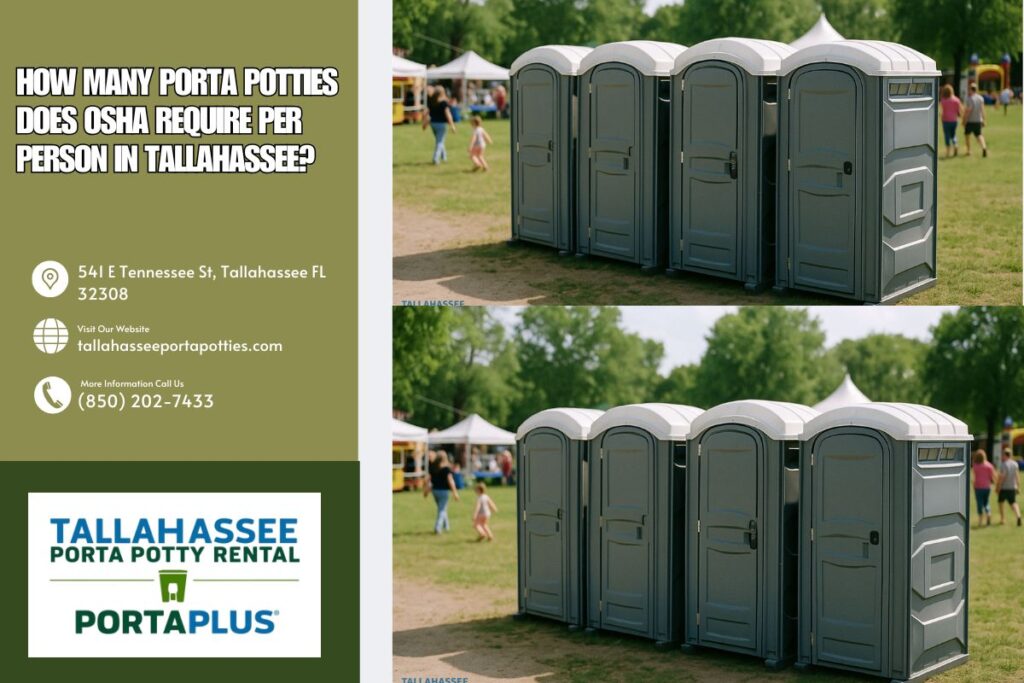
Compliance isn’t optional regarding OSHA’s sanitation standards for construction and industrial worksites. You must provide toilet facilities when employees don’t have immediate access to nearby restrooms.
OSHA’s 29 CFR 1926.95 mandates one toilet seat per 20 workers for the initial 200 employees, then one extra seat for every 40 workers beyond that threshold.
Your facilities must maintain proper ventilation, adequate lighting, and regular maintenance schedules. Modern portable sanitation solutions offer enhanced features, including hand sanitizer dispensers, interior lighting, and ventilation systems, that exceed basic compliance requirements.
You’re responsible for ensuring facilities remain clean, functional, and accessible throughout the project duration. Strategic placement within 200 feet of work areas optimizes efficiency while ensuring compliance with regulatory standards.
Non-compliance results in citations, fines, and potential work stoppages that impact project timelines and budgets.
See also: Tallahassee porta potty rental services
Two fundamental ratios govern the requirements for portable toilets on worksites in Tallahassee.
You’ll need one toilet facility for every 20 workers during an 8-hour shift when permanent restrooms aren’t accessible within 200 feet. This 1:20 ratio applies to standard construction sites and outdoor work environments.
For projects with more than 200 workers, OSHA requires one additional toilet for every 40 employees beyond the initial 200.
You’re responsible for calculating these ratios based on peak workforce numbers, not average daily attendance.
Gender-specific requirements necessitate separate facilities when employing both male and female workers.
Mixed-gender sites require marked, lockable units or designated separate facilities.
Competent contractors utilize these compliance metrics to optimize productivity while maintaining regulatory adherence in Tallahassee’s dynamic construction market.
When employing mixed-gender workforces in Tallahassee, you must provide separate restroom facilities that comply with OSHA’s stringent requirements for gender-specific facilities.
You’ll need distinct portable toilets designated exclusively for male and female workers, clearly marked with appropriate signage to prevent confusion and guarantee regulatory compliance.
OSHA mandates separate facilities when you’ve got 20 or more employees of each gender working simultaneously. You can’t simply rely on single-occupancy units for larger crews.
Modern porta potty solutions incorporate advanced locking mechanisms and enhanced privacy features that surpass basic separation requirements.
Competent contractors utilize GPS-enabled units with occupancy sensors, allowing real-time monitoring of usage patterns and maintenance needs.
This creative approach ensures that you maintain ideal sanitation standards while streamlining compliance documentation for regulatory inspections.
Beyond basic facility separation requirements, OSHA’s extensive standards demand strict adherence to accessibility provisions, maintenance protocols, and documentation procedures that directly impact your Tallahassee worksite operations.
You’ll need ADA-compliant units when employing workers with disabilities, featuring wider doors, interior handrails, and accessible entry ramps.
Your maintenance schedule must include daily cleaning inspections, waste level monitoring, and documentation of supply restocking.
OSHA requires immediate repairs for damaged locks, ventilation issues, or structural problems that compromise worker safety.
You’re obligated to maintain written records of service intervals, sanitation procedures, and any reported incidents.
Competent contractors utilize digital tracking systems to automate compliance documentation, ensuring seamless regulatory audits while optimizing operational efficiency through predictive maintenance scheduling and real-time inventory management.
Proper documentation establishes your compliance foundation, yet handwashing facilities represent OSHA’s most stringent sanitation mandate for Tallahassee construction sites.
You must provide handwashing stations within 200 feet of each porta potty installation, featuring potable water, soap dispensers, and individual towels or air dryers.
OSHA’s handwashing requirements aren’t negotiable—they’re vital for worker health protection:
Modern handwashing stations integrate touchless activation, heated water systems, and antimicrobial soap dispensing technology, ensuring your Tallahassee projects exceed baseline compliance standards.

Three critical factors determine your porta potty maintenance schedule in Tallahassee: workforce size, usage duration, and OSHA’s mandatory sanitation standards.
OSHA mandates specific cleaning frequencies based on operational intensity. You’ll need improved maintenance protocols for high-traffic construction sites versus standard office environments.
| Usage Level | Cleaning Frequency |
|---|---|
| Light (1-10 users) | Weekly |
| Moderate (11-25 users) | Bi-weekly |
| Heavy (26-50 users) | 2x weekly |
| Intensive (50+ users) | Daily |
Your maintenance schedule must align with OSHA’s sanitation requirements while addressing the challenges posed by Florida’s humid climate. Regular servicing prevents bacterial growth, odor accumulation, and regulatory violations. PortaPlus implements GPS tracking and automated scheduling systems to guarantee consistent service delivery. You’re investing in workforce health, productivity, and regulatory compliance through strategic maintenance planning.
While federal OSHA standards establish baseline requirements, Tallahassee’s unique regulatory environment demands extra compliance considerations that directly impact your porta potty deployment strategy.
Leon County’s health department enforces supplementary sanitation protocols beyond federal minimums, particularly for construction sites exceeding 30 days. You’ll navigate Florida’s stringent environmental regulations regarding waste disposal and groundwater protection.
The city’s permitting process requires detailed facility placement plans that account for ADA accessibility requirements and setback distances from water sources.
Key compliance challenges you’ll face:
Competent contractors partner with local rental services that have an intimate understanding of Tallahassee’s regulatory landscape.
Because Tallahassee’s inspection protocols operate on both scheduled and random enforcement cycles, you’ll encounter multi-agency oversight that can trigger simultaneous reviews from OSHA, Leon County Health Department, and city code enforcement officers.
You’ll need real-time compliance tracking systems to navigate these overlapping jurisdictions effectively.
Competent contractors implement digital monitoring solutions that automatically document unit quantities, placement locations, and service intervals.
You’ll want GPS-enabled inventory management that generates instant compliance reports when inspectors arrive unannounced.
Modern enforcement focuses on data-driven verification rather than manual headcounts.
Your documentation strategy should include photographic evidence, timestamped service logs, and hourly worker-to-unit ratios.
Advanced rental partners provide cloud-based dashboards that streamline inspector access to compliance metrics, reducing site disruption while demonstrating proactive safety management through transparent, technology-enhanced accountability systems.
When selecting a porta potty rental provider in Tallahassee, you’ll need partners who maintain pre-certified compliance systems that automatically align with OSHA standards, Leon County Health Department regulations, and municipal code requirements.
Advanced rental providers integrate real-time monitoring protocols that track unit placement ratios, servicing schedules, and regulatory documentation. You’ll want contractors who deploy GPS-enabled fleet management systems, ensuring precise unit positioning and immediate verification of compliance.
Key partnership benefits include:
Innovative partnerships eliminate compliance guesswork while maintaining operational efficiency. Choose providers who demonstrate measurable compliance metrics and transparent reporting systems.
Beyond establishing compliant partnerships, you must implement systematic sanitation protocols that exceed minimum regulatory thresholds.
Deploy advanced hand sanitization stations at every portable facility entry point, integrating touchless dispensing technology to minimize cross-contamination risks. You’ll need structured cleaning schedules that align with peak usage patterns, utilizing EPA-approved disinfectants with proven efficacy against pathogens.
Implement real-time monitoring systems to track supply levels and maintenance requirements. Your protocol should include temperature-controlled waste management and ventilation optimization to prevent bacterial proliferation.
Configure strategic placement patterns that reduce congestion while maintaining accessibility compliance.
Document all sanitation activities through digital tracking systems, creating accountability chains that demonstrate compliance with regulatory requirements.
You’re establishing workplace hygiene standards that protect workers while showcasing your commitment to cutting-edge safety management practices.
While maintaining ideal sanitation standards requires systematic protocols, you must also calculate precise quantities of porta potties based on shift schedules and workforce dynamics.
Multiple shifts don’t simply multiply your requirements—they create overlapping demand patterns that require strategic planning.
You’ll need to factor in shift changes, break schedules, and peak usage times when crews converge. A 24-hour operation with three 8-hour shifts typically requires 25% more units than single-shift calculations suggest, as maintenance windows and change periods create bottlenecks.
Consider these critical factors for maximum deployment:
A competent workforce analysis drives compliant and efficient sanitation solutions.
As your project demands evolve, standard porta potties may not deliver the operational efficiency your workforce requires. Upgrading to deluxe units with hand-washing stations reduces cross-contamination risks while maintaining OSHA’s sanitation standards.
You’ll find that flushable units with freshwater tanks improve worker satisfaction and decrease maintenance intervals, directly impacting productivity metrics.
Consider ADA-compliant units when accessibility requirements apply—they’re not just regulatory necessities but strategic investments in workforce inclusion.
Climate-controlled options prove crucial during Tallahassee’s extreme weather conditions, preventing heat-related incidents that compromise safety protocols.
Intelligent monitoring systems track usage patterns, optimizing servicing schedules and reducing operational costs.
When you integrate these advanced solutions, you’re not just meeting compliance baselines—you’re creating competitive advantages through improved worker retention and optimized project efficiency.
You’ll face OSHA fines ranging from $15,625 for serious violations to $156,259 for willful infractions when you don’t comply with sanitation standards. These penalties can escalate quickly, making proactive compliance crucial for your operation’s financial health.
You’ll find OSHA’s sanitation requirements apply uniformly to indoor and outdoor construction projects. However, outdoor sites typically rely on portable facilities, while indoor projects may utilize existing plumbing when available and accessible.
Temporary events don’t fall under OSHA’s construction standards; however, you must follow local health department regulations for portable sanitation. Savvy event planners proactively exceed minimum requirements to guarantee attendee safety and satisfaction.
You’ll need porta potties available before workers start their initial shift on new projects. OSHA doesn’t specify exact timeframes, but facilities must be immediately accessible when employees begin work to guarantee compliance and safety.
Yes, you can file OSHA complaints about inadequate restroom facilities. Workers have the right to report unsafe sanitation conditions. OSHA investigates these complaints and can issue citations for non-compliance with sanitation standards.



© 2026 Tallahassee Porta Potty Rental | PortaPlus. All Rights Reserved.